
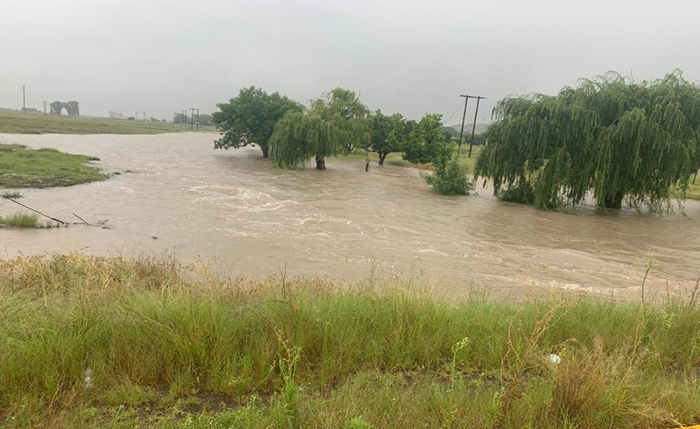
At the global scale, the frequency, extent, and severity of natural disasters have increased notably over the last several years, and economic losses from weather- and climate-related disasters have also risen. Climate-related disasters have come to dominate the disaster risk landscape, accounting for upwards of 80% of reported disasters worldwide (Centre for Research on the Epidemiology of Disasters).
Climate change is expected to increase the frequency, intensity, spatial extent, duration, and timing of many extreme weather-related events, including additional extreme climate events such as cold spells, which, without reductions in vulnerability, will increase the risk of disasters.
More frequent and intense events, combined with a growing and urbanizing population and increasing value in urban and built infrastructure, imply greater exposure to such events. The expected increase in weather-related disasters as a result of climate change is anticipated to negatively impact food production and water supply, infrastructure, settlements, and human well-being.
South Africa is susceptible to a number of extreme weather events, with the most common being floods, droughts, fires, and large storms. Other disaster risks include lightning strikes, heat waves, hail damage, wind storms, sea level rise, cold spells, and possible increases in health-related disasters.
Drought impacts stem from a combination of factors. Increasing rainfall variability is one aspect, but how this affects communities depends on how well people, the economy, and the environment can adapt. Various factors may undermine people’s ability to withstand reduced water availability (a meteorological drought) and to prevent it from developing into agricultural and hydrological drought with social, economic, and environmental impacts.
Both disaster risk reduction and climate change adaptation aim to mitigate climate-related risks by reducing and modifying environmental and human factors in order to support sustainable economic and social development. The National Climate Change Response White Paper (NCCRP) highlights disaster management as a key area of development for the country, due to the expected increase in extreme climatic events. This commitment is illustrated by the fact that the national government’s investment in disaster risk reduction and emergency response has risen from US$ 0.02 bn. to US$ 0.7 bn. between 2010 and 2015, as part of the total increase of investment in adaptation which rose from US$ 1.64 bn. to US$ 2.31 bn.
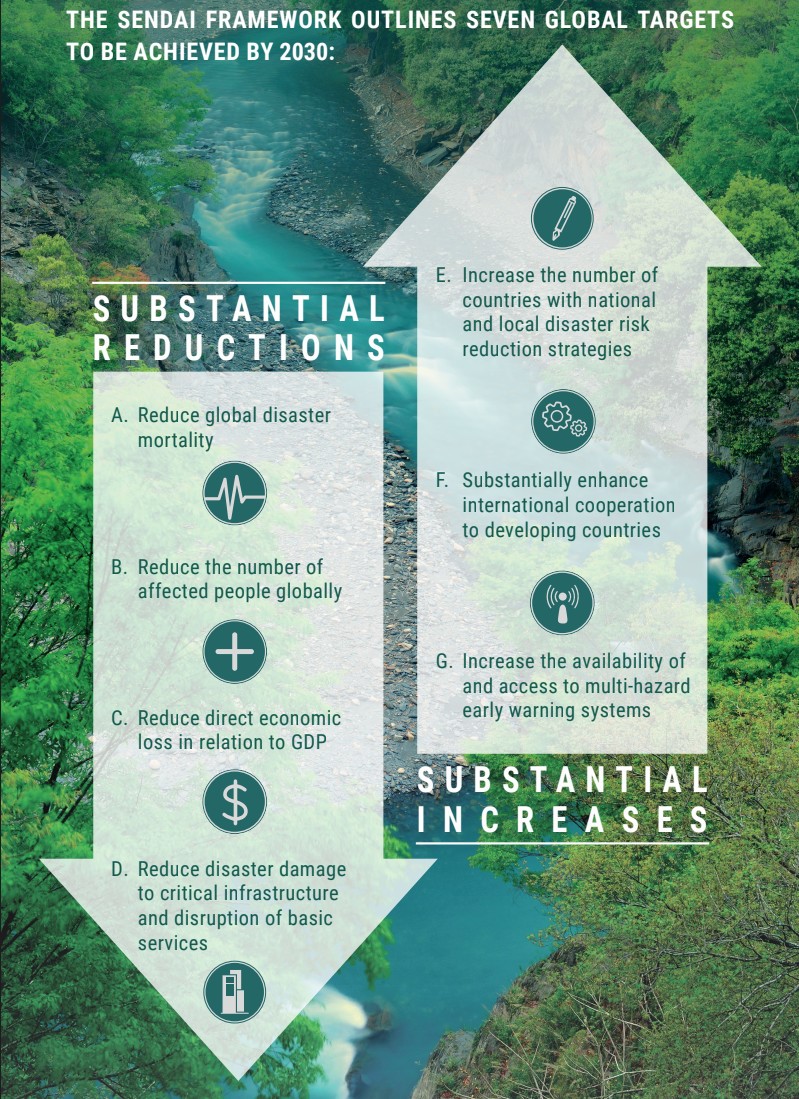
In March 2015, the Third United Nations World Conference on Disaster Risk Reduction (WCDRR) adopted the Sendai Framework for Disaster Risk Reduction 2015-2030, which was later endorsed by the UN General Assembly in its 69th session. The Sendai Framework provides the basis for a risk-informed and resilient future. The Sendai Framework specifically addresses climate change and climate action, providing measures, guiding principles and means of implementation. Sendai outcomes are a significant milestone in international cooperation for building resilience to climate-related disasters. The Sendai Framework establishes the significance of ensuring credible links on the post-2015 agenda including the sustainable development goals, financing for development, climate change and disaster risk reduction and the calls for enhanced coherence across policies, institutions, indicators, reporting and measurement systems for implementation.
Explore the latest insights and research on natural hazard tools in South Africa. For more information, visit SARVA and click the link below
© Copyright 2024 Department of Forestry, Fisheries & the Environment